Cycling Accident Claims Scotland: Your Guide to Compensation and Legal Support
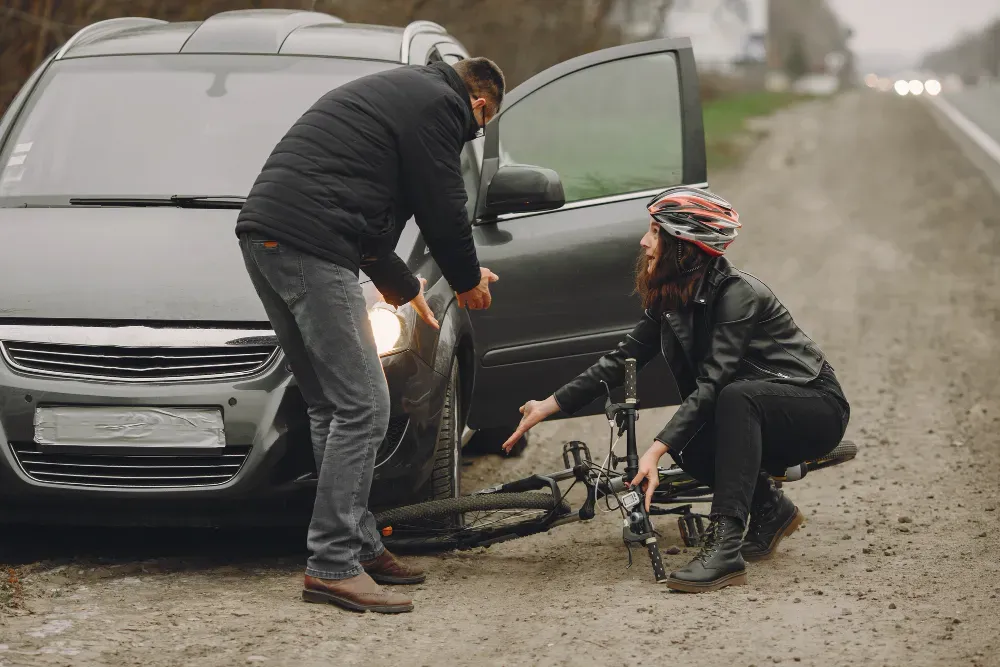
If you have been injured while cycling in Scotland, you may be entitled to compensation for pain and suffering, lost earnings, damaged equipment, and rehabilitation costs. This guide explains common causes, what to do after a crash, who can claim, and the Scottish claim process. Cycling injuries can occur for various reasons, including road accidents involving vehicles, poor road conditions, and rider errors. Recent statistics show that cycling accidents in Scotland have increased over the past five years, highlighting the importance of understanding your rights and the claims process.
Claim Solutions Scotland Ltd is authorised and regulated by the Financial Conduct Authority in respect of regulated claims management activities, registration number: 837720.
This guide outlines common causes of cycling accidents, including distracted driving, speeding, and inadequate signage. It covers essential steps to take following a crash, including seeking medical attention, gathering evidence, and reporting the incident to the police. The guide also explains who is eligible to claim compensation, including cyclists, pedestrians, and third-party witnesses.
The Scottish claims process involves several stages, beginning with reporting the accident and gathering evidence. Required evidence may include photographs of the scene, witness statements, and medical reports. Compensation is typically calculated based on the severity of injuries, expenses incurred, and the impact on an individual’s quality of life.
We are Claim Solutions Scotland Ltd, an FCA-regulated claims management company. If your free assessment is successful, we will connect you with an independent Scottish solicitor regulated by the Law Society of Scotland. We may receive a referral fee from partnered firms; this does not reduce your compensation.
Common causes of cycling crashes (and who may be at fault)
- Driver negligence: close passes, unsafe overtakes at pinch points, failing to give way at junctions, dooring, distraction (mobile phones), speeding or harsh braking. All road users owe a duty of care; breaches of this duty can give rise to a claim in negligence.
- Road defects: potholes, subsidence, raised ironworks, loose chippings, missing signage or markings. Local roads authorities must maintain roads in a safe condition (for example, under the Roads (Scotland) Act 1984). Claims focus on whether the authority knew or ought to have known about the defect and failed to act in time.
- Hit-and-run or uninsured drivers: where the driver cannot be traced or is uninsured, you may claim via the Motor Insurers’ Bureau (MIB).
- Other factors: poor site management near roadworks, spilt diesel or gravel, defective hire bikes or components (potential product liability).
What to do immediately after a cycling collision
- Safety and medical help: Call 999 for serious injury. Even if you ride home, see a clinician promptly. Early notes strongly suggest a connection between the injuries and the incident.
- Police report: If anyone is injured, a driver fails to stop, or a crime may have occurred, report to Police Scotland and obtain the incident or crime reference.
- Evidence: Photos or video of the scene, positions, defects, signage, lighting, weather, your bike, helmet, clothing damage, and all visible injuries. Driver details (name, registration, insurer). Witness contacts and any available dashcam footage or CCTV footage (ask nearby premises promptly, as footage is often overwritten within days). Keep your damaged kit (do not repair it yet).
- Paperwork: Keep receipts for travel, medications, physio, bike hire, and a pain diary tracking symptoms and recovery.
- Tell your insurer (if you have one) and seek legal advice early. Your solicitor can request CCTV footage, arrange medical examinations, and protect limitation dates.
Who can claim and time limits in Scotland?

- Eligibility: Any cyclist injured by another’s negligence (driver, roads authority, contractor) or by a defect or product failure.
- Standard time limit: 3 years from the accident or from the date of knowledge (for latent injury) under the Prescription and Limitation (Scotland) Act 1973.
- Children: Time usually runs from the 16th birthday (so until age 19). A parent or guardian can claim sooner as a “litigation friend.”
- Capacity: Where a person lacks mental capacity, time may not run until capacity is regained or a guardian is appointed. Act promptly; evidence is easier to secure when it is fresh.
The claims process (Scotland)
- Free Legal Assessment: Prospects, Evidence Plan, and Funding Explained.
- Letter of claim to the at-fault insurer, roads authority, or supplier.
- Evidence and valuation: medical examinations, treatment plan, earnings proof, repair or total-loss valuations; defect logs or inspection records for road-defect cases; expert reports where needed.
- Negotiation and interim payments: seek interim funds if liability is accepted and you have immediate needs.
- Court (if needed): Sheriff Court or All-Scotland Personal Injury Court for suitable cases.
MIB claims (uninsured or untraced): You will need a police reference, medical evidence, and proof of losses. The process mirrors insurer claims, but under MIB rules.
What you can claim
General damages (Solatium)
Compensation for pain, suffering and loss of amenity, cross-checked against current valuation guidelines and Scottish case law. Head injuries, fractures, scarring and psychological harm (such as anxiety or PTSD) are all assessable.
Special damages (Financial Losses)
- Earnings: past loss, overtime or bonus, self-employed turnover impact, and future earning capacity.
- Medical and rehab: physio, counselling, orthotics, private diagnostics where appropriate.
- Care and assistance: paid help and reasonable family care.
- Travel and incidental expenses: for medical or therapy appointments.
- Bike and kit: repair or market value in the event of a total loss; helmet, lights, clothing, phone or computer mounts, and power meters. Keep estimates or receipts.
- Other: race entries, training plans, coaching, and loss of enjoyment of planned events can be recoverable, provided they are evidenced.
Road-defect (Pothole) Claims: What matters most
- Pinpoint the defect: precise location, width, length, depth with a reference item or measuring app.
- Please note: Prior complaints, inspection cycles, or photos showing the defect existed for a sufficient period that it should have been addressed.
- Causation: photos and expert evidence linking the defect to wheel damage, crash dynamics, and injury pattern. Authorities may defend on inspection frequency or prompt repair. Early disclosure requests and FOI can help.
Children’s cycling claims
Courts scrutinise child settlements to ensure fairness; damages are often held in court or trust until adulthood. Include long-term education and participation impacts, future equipment or adaptation needs, and ongoing therapy in the valuation.
Typical timelines
- Straightforward liability and short-lived injuries: approximately 6 to 12 months.
- Serious injury, road-defect disputes, or MIB or hit-and-run: 12 to 24 months or more (medical recovery and prognosis drive timing). Interim payments can bridge urgent expenses where liability is admitted.
Funding and Fees

Most partner firms offer No Win No Fee (Conditional Fee Agreement):
- No upfront fees to start your case.
- No success fee if you lose.
- If you win, a pre-agreed success fee is deducted from your compensation.
Typically, customers pay 20% inclusive of VAT of the compensation amount recovered by our third-party law firms, although this depends on your circumstances. Termination fees may apply if you do not keep to the terms of the agreement.
Your solicitor may recommend After-the-Event (ATE) insurance to protect against adverse costs; they will explain premiums and whether these are deducted on success.
Important: You are not required to use a claims management company. You can approach solicitors directly (see the Law Society of Scotland), or seek free guidance from Citizens Advice.
- Can I recover the cost of my bike and kit if the driver is not identified? Yes, through an MIB untraced claim, provided you reported to Police Scotland promptly and have evidence of the incident and losses.
- What if I was not wearing a helmet or lights? You can still claim. However, the insurer may argue that the claimant was contributorily negligent. Evidence on the mechanism of injury and visibility will matter; your solicitor will address any proposed deductions.
- Do I need to accept the insurer’s first offer? No. Early offers may undervalue the medical and future loss elements. Independent medicals and a full schedule of loss usually improve outcomes.
- I am self-employed; how do I prove lost earnings? Provide tax returns, monthly accounts, booking logs, cancelled contracts, and client statements. Claims can include reduced capacity and lost opportunities.
- Can I claim for psychological injury? Yes, symptoms (such as travel anxiety, nightmares, avoidance) supported by GP or psychology reports are compensable, with therapy costs included where appropriate.
Conclusion
Cycling claims rely on strong evidence, early medical documentation, and a clear legal strategy, particularly in cases involving hit-and-run, road defects, and children. With a specialist Scottish solicitor, you can pursue fair compensation for injury, kit, and financial loss under transparent, regulated funding.