


Road Accident Emergency Services Scotland
Legal Claims Guide for Compensation and Support
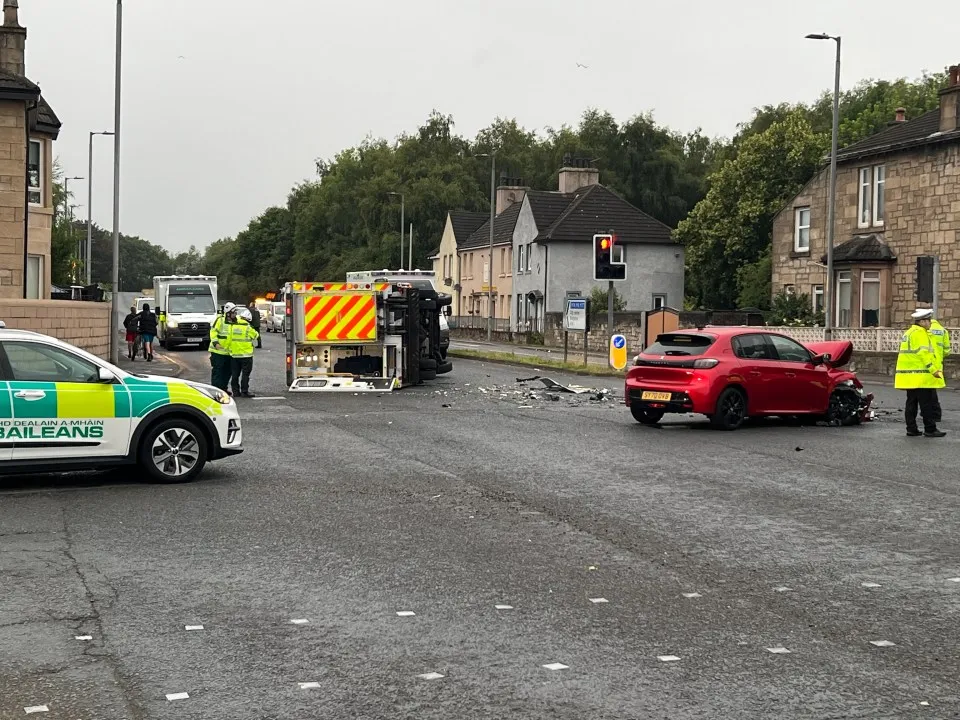
Road accident emergency services in Scotland – Police Scotland, the Scottish Ambulance Service and the fire service – play a crucial role in keeping people safe, recording what happened, and creating evidence that may later support a road traffic accident (RTA) claim under Scots Law.
This guide explains how emergency responses link to potential claims, what to do at the scene, who may be able to claim, how the three-year time limit works, and how compensation is assessed.
About Our Service
We are Claim Solutions Scotland Ltd, a claims management company authorised and regulated by the Financial Conduct Authority (FCA).
Where appropriate, we may introduce you to an independent Scottish personal injury solicitor regulated by the Law Society of Scotland. Any legal advice you receive will be provided by that solicitor, not by us.
If you choose to instruct a solicitor, we may receive a referral fee, but this does not affect the advice you receive or the level of compensation you may be awarded.
Immediate Steps After a Road Accident in Scotland
What you do in the minutes and hours after a collision can affect both your health and any later claim.
1. Prioritise Safety and Medical Help
- Move to a safe location if you can.
- Call 999 if anyone is injured, the road is blocked, or there is a fire or fuel risk.
Emergency services create key records:
- Police Scotland – incident reference, collision report, witness details, potential offences.
- Scottish Ambulance Service – call time, observations, treatment and destination hospital.
- Hospital / GP – A&E notes, imaging, diagnosis and follow-up.
These documents may later be requested by a solicitor.
2. Preserve Basic Evidence
- Exchange names, addresses, vehicle registrations and insurance details.
- Take photos of vehicle positions, road markings, debris, and any visible injuries.
- Collect witness names and contact details.
- Write brief notes on time, location, weather and anything said by other drivers.
Even simple notes made soon after the accident can help if liability is later disputed.
Reporting to Police Scotland
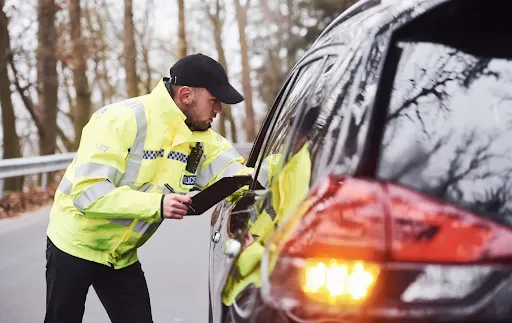
You should contact the police if:
- Anyone can be injured.
- There is damage to another vehicle or property.
- Details are not exchanged at the scene.
If officers attend:
- Ask for the incident reference number.
- Note the officer’s name and station.
If police do not attend, you may still need to self-report within set timescales. A solicitor can later request certain police documentation (where available).
Why Prompt Medical Attention Matters
Seeing a medical professional is important because:
- Some injuries – such as whiplash, concussion or internal injuries – may not be obvious immediately.
- A&E and GP records provide independent evidence of symptoms, diagnosis and treatment.
- Follow-up care (physiotherapy, imaging, referrals) shows how your injuries develop over time.
Medical records are central to:
- Proving you were injured.
- Linking those injuries to the accident.
- Valuing compensation for pain, suffering and treatment needs.
Evidence to Keep After a Road Accident
Useful evidence includes:
- Photos or video of the scene, vehicles, road layout and injuries.
- Dashcam or helmet-cam footage, telematics data, or information about nearby CCTV cameras.
- Witness contact details and short notes of what they observed.
- Payslips, receipts and mileage records for lost earnings, treatment and travel costs.
Who May Be Able to Claim in Scotland?
Under Scots personal injury law, a claim may be possible where:
- You suffered an injury or financial loss.
- Another person or organisation owed you a duty of care (for example, another driver or a road authority).
- There is evidence they were at least partly at fault.
- The claim is brought within the relevant three-year time limit (subject to limited exceptions).
Potential claimants include:
- Drivers and passengers of cars, vans and lorries
- Motorcyclists and pillion passengers
- Cyclists and pedestrians
- Roadside workers, such as breakdown staff or road maintenance workers
A solicitor can review your circumstances and advise whether a claim appears realistic.
Fault, Contributory Negligence and Your Claim
To succeed with a claim, you usually need to show:
- Duty of care – another party had a legal duty to take reasonable care.
- Breach – for example:
- Driving too fast for conditions
- Failing to keep a proper lookout
- Ignoring traffic lights or road markings
- Causation – the breach caused your injuries.
- Loss – such as pain and suffering, lost income or treatment costs.
If you were partly at fault (for example, not wearing a seatbelt or stepping into the road without checking), compensation may be reduced by a percentage rather than removed entirely. This is called contributory negligence.
Typical Injuries in Road Accident Claims

Claims may involve:
- Whiplash and soft-tissue neck or back injuries
- Fractures and dislocations
- Head and brain injuries
- Spinal cord injuries
- Seatbelt and airbag injuries
- Psychological harm such as anxiety, travel phobia or PTSD
The key point is that the injury is properly diagnosed, recorded and linked to the collision.
No Win No Fee – Key Features
Many Scottish personal injury solicitors offer No Win, No Fee (success-fee or conditional fee) arrangements. While terms vary, typically:
- You do not pay the solicitor’s basic fee upfront.
- If the claim succeeds, the solicitor may deduct an agreed, capped success fee from your compensation.
- If the claim does not succeed, you usually do not pay the basic fee, although some expenses (e.g. expert reports or court fees) may not always be covered, depending on the agreement.
- After-the-Event (ATE) insurance may sometimes be recommended to protect against specific risks.
Before you sign, the solicitor should give you clear written information about what you might pay if you win or lose and whether insurance is recommended.
Step-by-Step Claims Process – Overview
Although every case is different, many Scottish road accident claims follow this pattern:
- Initial Enquiry – you discuss the accident, injuries and evidence with a solicitor.
- Investigation & Evidence Gathering – Medical records, police and ambulance reports, witness statements, and CCTV footage are obtained.
- Pre-Action Negotiation – a letter of claim is sent to the insurer, evidence is exchanged, and offers may be considered.
- Settlement or Court – if a fair settlement cannot be reached, the solicitor may recommend raising court proceedings.
No particular outcome or timescale can be guaranteed, but you will be advised about risks and options at each stage.
Uninsured or Untraced Drivers (MIB Claims)
If the at-fault driver is uninsured or untraced (for example, in a hit-and-run), you may still be able to claim through the Motor Insurers’ Bureau (MIB), subject to the scheme’s rules.
You will normally need:
- Police reference details
- Any information you have about the vehicle or driver
- Evidence of the accident and your injuries
A solicitor can explain whether an MIB application is appropriate in your circumstances.
Time Limits for Scottish Road Accident Claims
In most Scottish road accident cases:
- Court proceedings must start within three years of the accident, or
- Within three years of the date you first realised you had an accident-related injury.
Special rules apply to:
- Children – time usually runs from their 16th birthday.
- For adults lacking capacity, time limits may be paused.
- Fatal claims – generally three years from the date of death or date of knowledge.
Because preparing a case and gathering evidence can take time, many people find it helpful to seek advice well in advance of the deadline.
How Solicitors Support Road Accident Victims
A Scottish personal injury solicitor typically:
- Reviews your accident and evidence to assess prospects.
- Advises on funding options, including any No Win No Fee arrangement.
- Obtains police, ambulance and medical records.
- Commissions independent medical reports.
- Negotiates with insurers and, where necessary, raises and conducts court proceedings.
You remain in control of key decisions, such as whether to accept a settlement offer or proceed to court.
Final Thoughts
Understanding how emergency service records, evidence, fault and time limits fit together under Scots personal injury law can make the aftermath of a road accident easier to navigate. By prioritising safety, preserving basic evidence, seeking timely medical care and obtaining early legal advice, many injured road users place themselves in a stronger position to explore a potential claim.
If you are considering a road traffic accident claim in Scotland and want to understand your options with a regulated specialist, an initial assessment can help you decide on your next steps.