


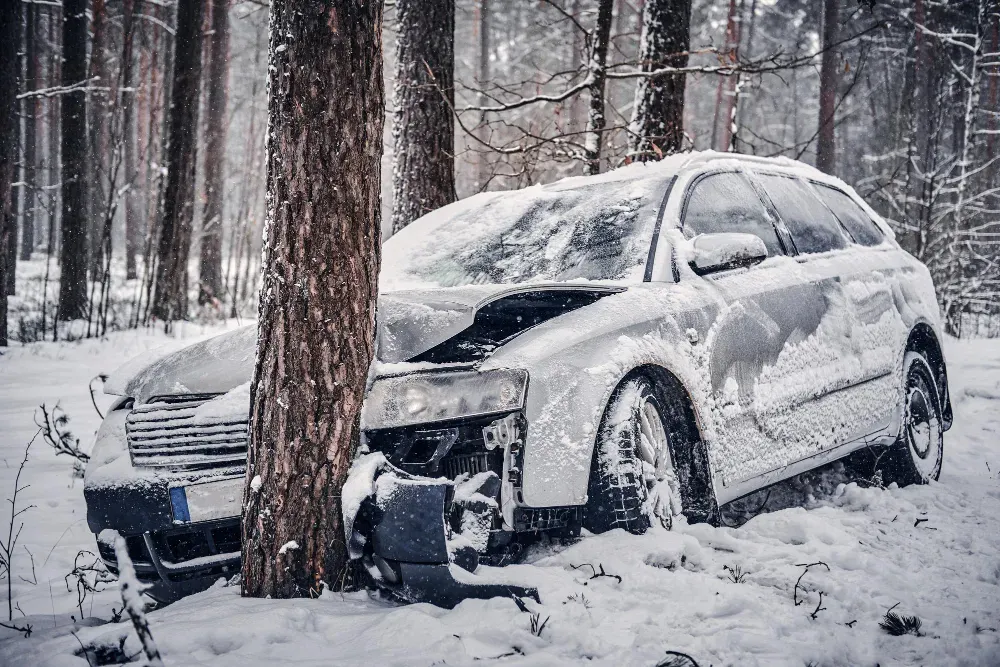
Snow Car Accident Claims Scotland: Your Guide to Getting Paid for Winter Road Crashes
We’re an FCA-regulated claims management company. If your assessment is successful, we’ll connect you with an independent Scottish solicitor regulated by the Law Society of Scotland. We may receive a fee from partnered firms; this does not reduce your compensation.
Claim Solutions Scotland Ltd (trading as Claim Solutions Scotland) helps you understand your rights after a winter road accident. Claim Solutions Scotland Ltd is authorised and regulated by the Financial Conduct Authority in respect of regulated claims management activities, registration number: 837720.
Quick actions after a snow/ice crash
- Safety & medical: Call 999 if needed. Get a same-day medical check; early records anchor your claim.
- Police Scotland: Report where anyone is injured, a driver fails to stop, or offences may be involved. Keep the incident number.
- **Evidence:**Photos/video of road surface (ice/snow), tyre tracks, salt/grit, vehicle positions and damage Dashcam/CCTV (ask nearby premises quickly, as footage is often overwritten). Witness names and contacts.
- Paper trail: Receipts (taxis, meds, repairs), payslips/P60 for earnings loss, mileage to treatment, and a pain diary.
- Legal help early: A Scottish PI solicitor can secure council winter service logs, Met Office data, and start the Pre-Action Protocol process.
Who can claim?
- Drivers and passengers are injured in winter conditions.
- Pedestrians/cyclists are hit by vehicles that lose control on ice.
- Employees driving for work (with potential employer liability).
- Vehicle owners for repair/total-loss costs.
How fault is decided in winter crashes
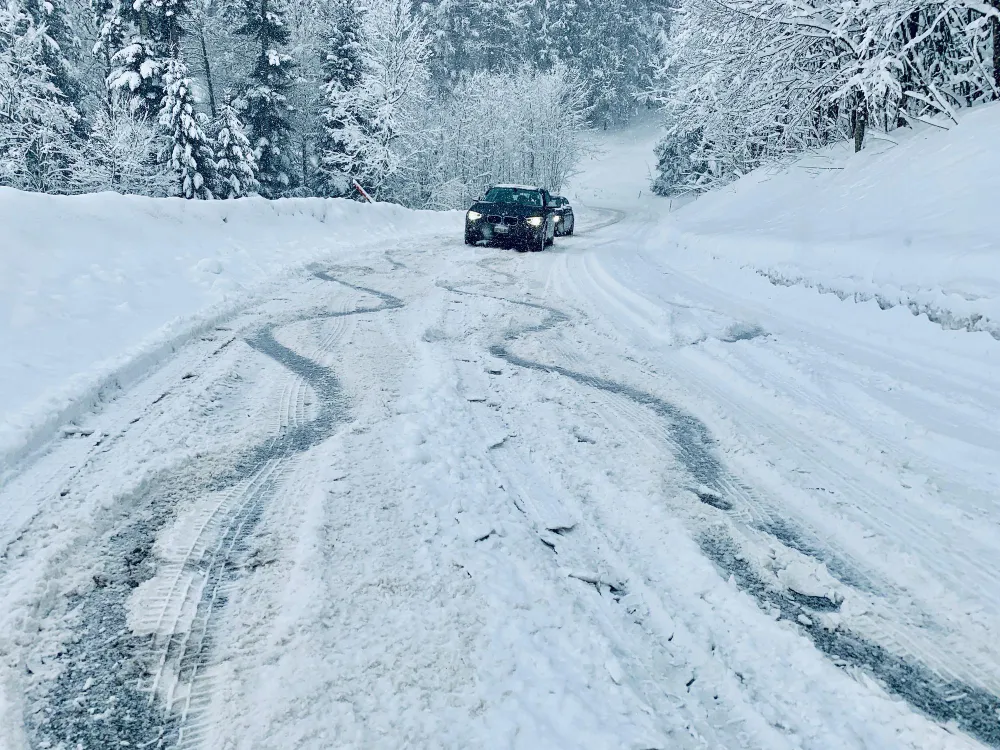
1) Drivers (primary duty on the road)
2) Roads authorities (Transport Scotland / local councils)
3) Employers (work journeys)
4) Landowners/occupiers (car parks/private roads)
Contributory negligence
Evidence that wins winter cases
- Police report/incident number and any collision diagram.
- Scene media: close-ups of ice sheen, packed snow, untreated patches, salt residue, grit bins, signage.
- Weather data: Met Office reports/alerts for the precise window/location.
- Authority logs: gritting runs, call-out times, route priority, salt stock, patrol notes.
- Dashcam/CCTV showing the approach, traffic flow, and vehicle control.
- Medical evidence: GP/A&E records, independent medico-legal report (diagnosis, causation, prognosis, rehab).
- Financials: payslips, accounts (self-employed), repair/hire/valuation, travel and care receipts.
What you can claim

General damages (solatium)
Special damages (financial losses)
- Earnings: past net loss and, where applicable, future earning capacity.
- Medical/rehab: physio, counselling, imaging, aids/adaptations.
- Care & assistance: paid or reasonable family help.
- Travel & incidentals: treatment mileage, parking, taxis.
- Vehicle: repair/total loss, excess, diminished value, hire/credit hire.
- Misc: damaged clothing/tech, policy out-of-pocket costs.
Indicative range (very broad): minor soft-tissue cases often low thousands; fractures/lasting symptoms commonly five figures; serious head/orthopaedic/psychological injuries can reach high five to six figures, evidence-dependent.
Special winter scenarios
Potholes after freeze-thaw
Uninsured or hit-and-run drivers (including snow skids)
The Scottish claims process
- Intimation/letter of claim to the at-fault party/insurer ASAP (no rigid 3-month rejection rule, just don’t delay).
- Insurer investigation: typically up to 3 months to admit/deny under the Scottish Pre-Action Protocol.
- Medical & valuation: independent exam(s); schedule of loss for all heads.
- Negotiation & interim payments: seek interim funding once liability is admitted and needs are urgent.
- Court (if needed): Sheriff Court or the All-Scotland Personal Injury Court.
No Win No Fee in Scotland (what it really means)
- No upfront solicitor fees to start your case.
- If you lose, you don’t pay your solicitor’s success fee. (Limited outlays may arise; your solicitor will explain how they’re managed/insured.)
- If you win, a pre-agreed success fee is deducted from damages, subject to statutory caps under the Civil Litigation (Expenses and Group Proceedings) (Scotland) Act 2018. For most personal injury claims, caps apply to specified damages categories (your solicitor will set out the exact cap that applies to your case).
FAQs
- Is sliding on black ice “nobody’s fault”? Not automatically. Investigators examine speed, spacing, observation, and whether the surface should have been reasonably treated.
- Can I claim if I was partly to blame (e.g., worn tyres)? Yes, your award may be reduced due to contributory negligence, but you can still recover the remaining balance.
- Do councils have to prevent all ice from forming? No. They must take reasonable measures. That’s why winter plans, forecasts and actual gritting logs matter.
- Can I recover the cost of ATE insurance? Usually, no in Scotland; the premium typically comes from your damages if you are at fault. Your solicitor will advise whether ATE is worthwhile in your case.
- How are payouts valued? By injury evidence, recovery time, long-term impact and financial loss, with reference to JCG guidance and Scottish decisions.