


Roundabout Accident Claims in Scotland: Liability, Evidence & Compensation Guide
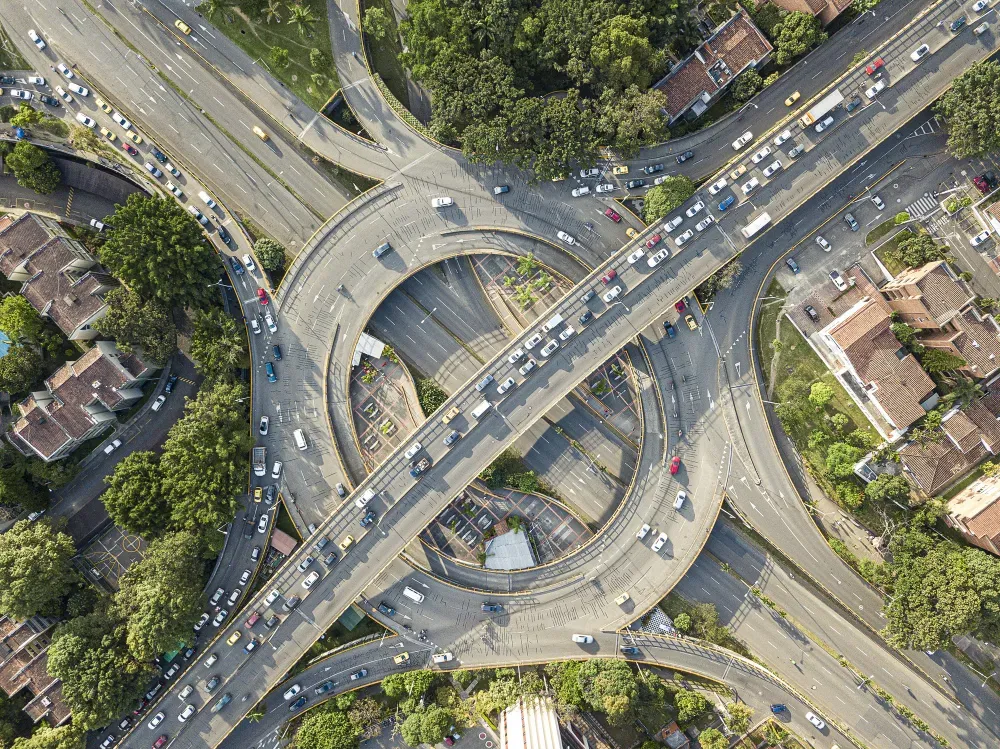
Roundabout accidents in Scotland can be especially complicated because of multi-lane layouts, different driver views on right of way, and the fast-changing nature of traffic. This guide explains how fault is assessed under Scots Law, what evidence can help your case, how the three-year time limit works, and what compensation may cover if you have been injured in a roundabout collision.
Claim Solutions Scotland Ltd is authorised and regulated by the Financial Conduct Authority for regulated claims management activities, registration number: 837720.
We are Claim Solutions Scotland Ltd, a claims management company. We receive payment from our partnered law firms. If your free claim assessment is successful, you will be connected to a specialist law firm. Any legal advice will always come from the solicitor, not from us. We may receive a referral fee, but this does not affect the service you receive or the amount of compensation you may be awarded.
No Win No Fee: Usually, customers pay 20% (including VAT) of the compensation amount recovered by our third-party law firms, although this depends on your circumstances. Termination fees may apply if you do not keep to the terms of the agreement.
Feeling Overwhelmed? Let Us Help You Explore Your Options
Roundabout accidents can be confusing, especially when several vehicles are involved. You do not need to work out liability, evidence, or next steps alone.
Our online assessment can help outline your situation and, where appropriate, we may introduce you to a specialist Scottish personal injury solicitor who can advise you on your options under Scots Law.
What Are Roundabout Accidents and How Do They Happen?
A roundabout accident happens when a collision takes place while entering, circulating, or leaving a roundabout. These incidents often occur because of:
- Not giving way
- Choosing the wrong lane
- Misjudging speed or gaps
- Cutting across lanes
- Not indicating when leaving
- Not seeing cyclists, pedestrians, or motorcycles
Understanding how the collision happened helps identify what evidence to record and how a solicitor may later analyse fault.
Common Causes of Roundabout Collisions
Typical causes include:
- Entering the roundabout without yielding
- Unsafe lane changes while on the roundabout
- Leaving from the wrong lane
- Sudden braking causing rear-end impacts
- Not seeing cyclists or motorcyclists
- Poor visibility or unclear markings
Documenting the position of vehicles, skid marks, and lane use can be especially important in disputes.
How the Scottish Highway Code Applies to Roundabouts

The Highway Code is not law itself, but it is central to how fault is assessed. Key points include:
- Giving priority to vehicles already on the roundabout
- Using the correct lane for your intended exit
- Signalling clearly when leaving
- Showing care to cyclists, pedestrians, and motorcyclists
- Avoiding sudden or unsafe lane changes
Evidence of a breach can help prove negligence when combined with photos, witness accounts, or video footage.
Determining Fault in Scottish Roundabout Accidents
How Is Fault Established?
Fault is assessed using the negligence test:
- Duty of care – all road users must act reasonably.
- Breach – a driver failed to meet that standard (for example, wrong lane, not giving way).
- Causation – that breach directly caused the collision and your injury.
- Loss – such as pain, suffering, lost earnings, or vehicle damage.
Insurers and solicitors usually consider:
- Highway Code breaches
- Dashcam or CCTV footage
- Witness statements
- Photographs of positions and damage
- Police reports
- Road layout and lane markings
Understanding Shared Blame (Contributory Negligence)
If you are partly responsible, your compensation may be reduced by a percentage. Examples include:
- Leaving from the wrong lane
- Not indicating
- Wearing a seatbelt incorrectly
- Sudden braking without reason
Shared blame does not stop you from claiming. It only reduces the final award by your share of responsibility.
What to Do Immediately After a Roundabout Accident
To protect both your health and your potential claim:
1. Prioritise Safety
- Move to a safe location if possible
- Call 999 if anyone is injured or the road is blocked
2. Gather Evidence
- Photos of vehicle positions, markings, and damage
- Dashcam footage
- Names and contact details of witnesses
3. Report the Accident
- To Police Scotland if required
- To your insurer (avoid guessing about blame)
4. Seek Medical Attention
- Even minor symptoms should be checked
- Medical records later help prove injury, treatment, and recovery
5. Write Notes
- Weather conditions
- Traffic flow
- Statements made by other drivers
These early steps often form the foundation of a strong claim.
Eligibility and the Scottish Claims Process

You may be eligible to claim if:
- You were injured in the collision
- Someone else was at least partly at fault
- You suffered financial loss, pain, or inconvenience
- You are within the legal time limit
Eligible claimants include:
- Drivers
- Passengers
- Cyclists
- Motorcyclists
- Pedestrians
- Family members in fatal cases
Children and people lacking capacity have special protections and different time limits.
The Step-by-Step Scottish Claims Process
Stage | Responsible Party | Typical Actions |
Evidence Gathering | Claimant/solicitor | Photos, dashcam, witness evidence |
Insurer Notification | Solicitor | Letter of claim, liability questions |
Medical Assessment | Independent expert | Injury report and prognosis |
Negotiation | Solicitor and insurer | Offers, counter-offers, valuation review |
Litigation (if required) | Solicitor and court | Court action, pleadings, hearings |
Timescales vary depending on the complexity of the accident and the severity of the injury.
Evidence Needed to Support a Claim
Evidence Type | What It Shows | How It Helps |
Photos or video | Road layout and damage | Reconstructs events |
Witness statements | Independent accounts | Strengthens credibility |
Dashcam or CCTV | Objective footage | Often decisive in disputes |
Medical records | Diagnosis and recovery | Helps value compensation |
Financial records | Lost earnings or expenses | Supports special damages |
It is best to keep both originals and copies.
Time Limits for Roundabout Accident Claims
Under the Prescription and Limitation (Scotland) Act 1973, you usually have:
✔ Three years
from the date of the accident or the date you became aware of the injury.
Different rules apply for:
- Children
- People lacking legal capacity
- Fatal accidents (claims by relatives)
Getting advice early helps make sure evidence is preserved within these time limits.
Compensation for Roundabout Accident Injuries
Compensation is usually divided into:
1. General Damages (Solatium)
For pain, suffering, and loss of quality of life.
2. Special Damages
For measurable financial losses, including:
- Lost earnings
- Travel expenses
- Medical and rehabilitation costs
- Damage to clothing or equipment
- Care provided by family or professionals
Example Injury Categories
Injury Type | Damage Category | Key Evidence |
Whiplash | General and physiotherapy costs | Medical and physio notes |
Fractures | General and loss of earnings | Imaging, receipts |
Long-term disability | High general and future losses | Specialist reports |
Solicitors use the Judicial College Guidelines (adapted for Scottish practice) and Scottish case law to estimate fair ranges.
Uninsured or Untraced Drivers: The MIB Route
If the at-fault driver is:
- Uninsured, or
- Unknown (hit-and-run)
You may still be able to claim through the Motor Insurers’ Bureau (MIB).
This requires:
- Police reference details
- Evidence of the accident
- Efforts made to identify the driver
- Medical records of your injuries
Solicitors often help with MIB applications because they can be complex.
How a Scottish Personal Injury Solicitor Can Help
A specialist solicitor can:
- Review your evidence and eligibility
- Obtain police and medical records
- Arrange independent medical assessments
- Prepare a formal schedule of losses
- Negotiate with insurers
- Represent you in court if needed
- Explain funding options clearly in writing
A solicitor cannot guarantee outcomes, but regulated professionals must act in your best interests and follow strict standards set by the Law Society of Scotland.
Choosing the Right Solicitor
Look for:
- Experience handling Scottish road traffic and roundabout claims
- Clear, written No Win No Fee terms
- Regular communication and updates
- Good client reviews and transparent processes
Always make sure you understand:
- What you may pay if you win
- What, if anything, you may pay if you lose
- Whether extra insurance is recommended
No Win No Fee Explained
A No Win No Fee (or “success-fee style”) agreement usually means:
- No upfront solicitor fees
- A capped success fee may be taken from compensation if the claim succeeds
- If the claim is unsuccessful, you usually do not pay the solicitor’s basic fee
- Some costs or insurance may still apply, depending on the agreement
All terms must be provided clearly in writing before you decide whether to proceed.
Q: Can I claim if I was partly at fault?
A: Yes, but your compensation may be reduced to reflect your share of responsibility.
Q: What if the other driver was uninsured or left the scene?
A: You may still be able to claim through the Motor Insurers’ Bureau (MIB).
Q: How long do I have to make a claim?
A: Usually, three years from the date of the accident or when you became aware of your injury.
Q: Will I have to go to court?
A: Most claims settle out of court, but your solicitor will advise if court action is needed.
Conclusion
Roundabout accident claims in Scotland can be complex because of unclear lane use, different driver accounts, and multi-vehicle collisions. By gathering evidence early, understanding how liability is assessed, and seeking specialist advice where needed, you can put yourself in a stronger position to explore a potential claim.
If you are unsure where to begin, an initial assessment can help you understand your rights, the evidence you will need, and your next practical steps.